

Ground meat. Different rules.
Ground meat plays by different rules. When a whole muscle gets fed through a grinder, every speck of surface bacteria — the stuff that lives harmlessly on a steak's exterior until you sear it off — gets folded into the interior, where heat takes longer to reach.
That is why the USDA draws its safe line at 165°F, and why this guide treats anything below that as restaurant territory. Smashburgers, medium burgers, tartare: accepted choices made by cooks who understand the trade. The temperatures below are honest references for either path. The principle stays the same: with ground meat, the inside is the outside.
Pull · Final · Rest
Temperatures worth knowing
Rare
Target 125°F / 52°C
Pull at 120°F / 49°C · Rest 3–5 min
Deep red, cool center. Loose, juicy bind with bright red runoff. Tartare territory, not casual cookouts.
Medium Rare
Target 135°F / 57°C
Pull at 130°F / 54°C · Rest 3–5 min
Warm red center fading to pink at the edges. Juice runs red-pink. The classic steakhouse burger pull.
Medium
Target 145°F / 63°C
Pull at 140°F / 60°C · Rest 3–5 min
Pink throughout, firmer bite, juices run clear-pink. The most common restaurant burger doneness.
Medium Well
Target 155°F / 68°C
Pull at 150°F / 66°C · Rest 3–5 min
Faint blush at the core, mostly grey-brown. Juices run clear. Firm but not dry if pulled on time.
Well Done
Target 165°F / 74°C
Pull at 160°F / 71°C · Rest 3–5 min
Uniform grey-brown throughout, clear juices, firm pinch. The USDA-safe threshold for any audience.
A note on carryover
Ground meat carries less heat than a thick steak because patties and meatballs have more surface relative to volume — the gradient is shallower, so there is less stored energy to migrate inward. Expect a 3–5°F rise on burgers and patties during a 3–5 minute rest. Meatloaf, denser and more insulated, climbs 5–8°F over 5–8 minutes. Pull early and let physics finish the job.
5 cuts
By cut
Smashburgers
High heat · Quick
Thin patties pressed onto a screaming surface for maximum Maillard crust. Cook fast and hot — they often hit doneness before a probe can keep up.
Pull at 150°F · Medium Well
Classic Burger Patties
Pan sear · Quick
Thicker, 6- to 8-ounce patties cooked over direct heat for a defined crust and a tender interior. The geometry where pull temperature matters most.
Pull at 140°F · Medium (or 160°F for USDA safe)
Meatballs
Braise · Slow
Whether simmered in sauce or oven-finished, meatballs cook through gently and forgive a longer hold. Sauce moisture keeps them from drying past target.
Pull at 160°F · Well Done
Meatloaf
Roast · Whole
A dense, slow-roasting form where carryover is significant and edges firm up well before the center. Probe the geometric middle and trust the rest.
Pull at 155°F · Well Done
Ground Lamb Kefta / Kebabs
High heat · Quick
Spiced, hand-formed around skewers or shaped into logs, cooked over live fire or a ripping grill. Pull before the bind breaks.
Pull at 150°F · Medium Well
Common questions
What temperature should ground beef be cooked to?
The USDA recommends an internal temperature of 160°F, with 165°F as a fully safe target. This applies to burgers, meatballs, meatloaf, and any preparation where ground beef is the main protein.
Why does ground beef need to be cooked higher than steak?
Grinding mixes surface bacteria into the interior of the meat, where heat takes longer to penetrate. A whole steak can be cooked rare because its surface — where pathogens live — gets seared. Ground beef has no such interior-exterior distinction.
Is medium-rare ground beef safe?
Below 160°F, ground beef carries an elevated risk of foodborne illness, including E. coli and Salmonella. Restaurants serving pink burgers source from controlled suppliers and follow specific protocols. At home, it is a personal-risk decision and not recommended for vulnerable eaters.
What is the safe temperature for a burger?
160°F internal is the USDA standard for ground beef burgers. 165°F is the broader safe threshold used for ground poultry and mixed preparations. Use a probe thermometer rather than color, which is unreliable in ground meat.
Can you eat a pink burger?
Pink color alone is not a reliable doneness indicator — ground meat can stay pink past 160°F due to pH and packaging, or look grey while still undercooked. The only honest answer is the temperature reading. If a pink burger reads 160°F or above, it is safe.
Guided cooks from CHEF iQ®
Cook ground meat with the iQ App
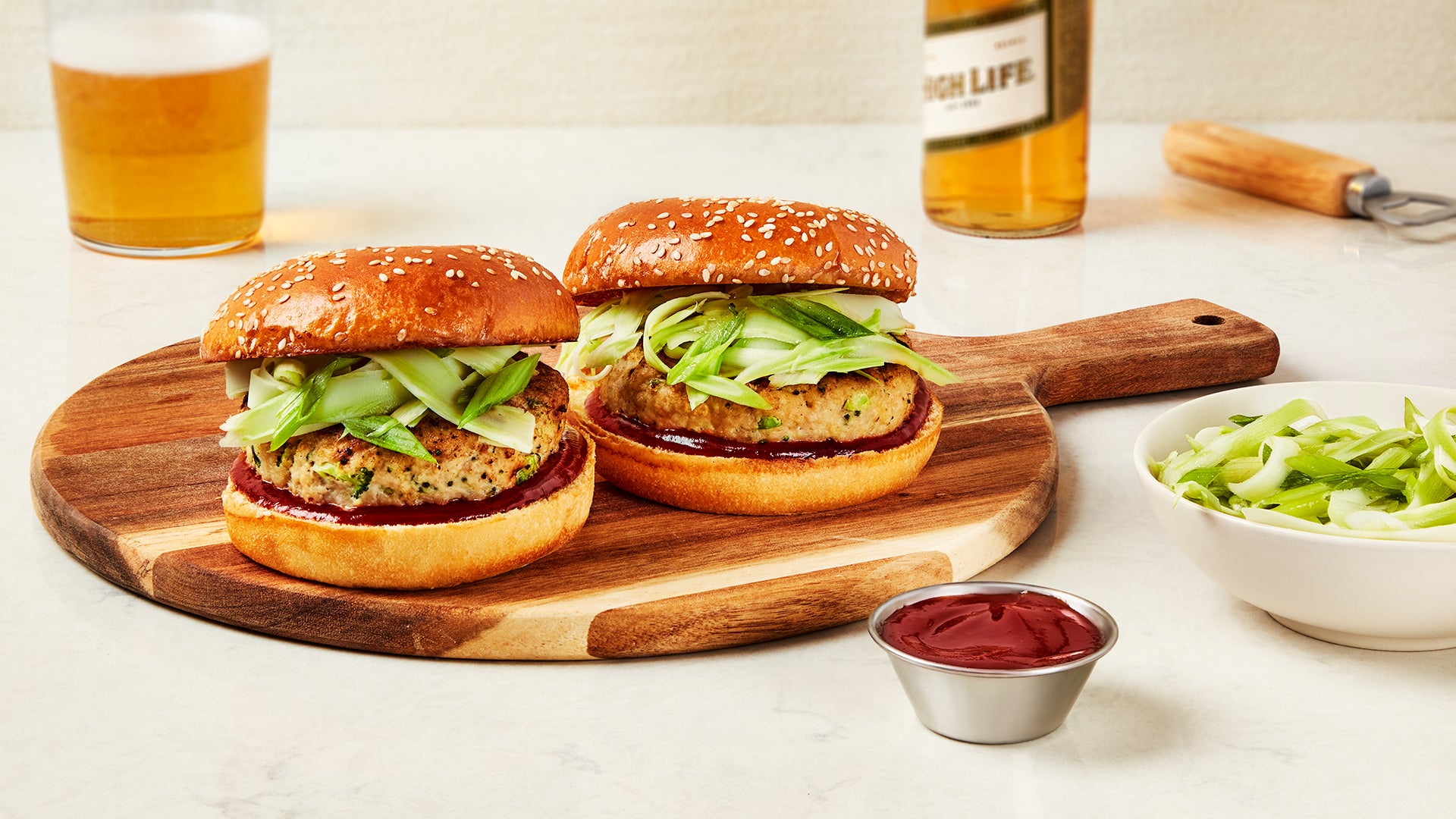
Chicken Teriyaki Burgers
All the flavor of your favorite Chinese chicken and broccoli stir-fry in burger form. In a brilliant bit of thriftiness, the burgers are topped with a slaw made from the crunchy, fiber-rich broccoli stems left over after mixing the florets into the burgers. Be sure to buy the thick, glaze-style Teriyaki sauce, not the thin marinade.
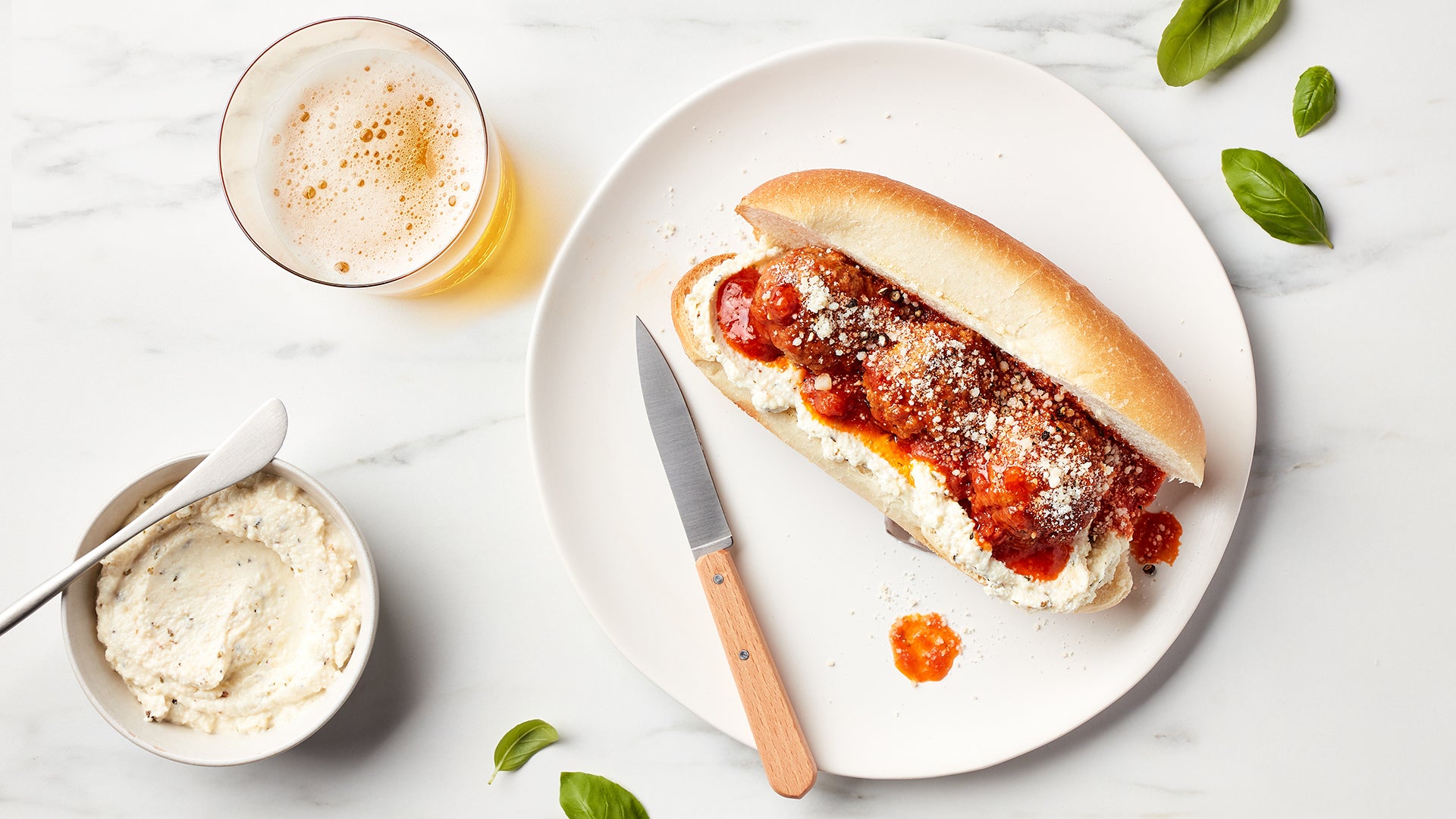
Meatball Subs
Why order from your local sub shop when you can make the meatball grinder of your dreams at home? Hoagie rolls slathered with ricotta spread cradle three hearty beef-and-sausage meatballs bathed in marinara.

Simple Grilled Burgers
The star of any backyard cookout, these classic, juicy burgers are easy to grill up just the way you like them with the iQ Sense®. Serve with your favorite toppings.


