

Beef. By the numbers.
Beef rewards precision more than almost any protein on the cutting board. A ribeye pulled at 130°F and a ribeye pulled at 150°F aren't the same dish — they're different textures, different colors, different reasons to cook in the first place. With a forty-degree usable range from rare to well done, every five degrees matters.
This guide covers the six doneness targets that actually show up in kitchens, plus the carryover math, cut-by-cut pull temps, and rest windows that separate a good steak from a great one. Cook by temperature, not by time.
Pull · Final · Rest
Temperatures worth knowing
Rare
Target 125°F / 52°C
Pull at 120°F / 49°C · Rest 5 min
Cool red center, soft yielding feel, glossy interior.
Medium Rare
Target 135°F / 57°C
Pull at 130°F / 54°C · Rest 5–8 min
Warm red core, springy resistance, juices run deep pink.
Medium
Target 145°F / 63°C
Pull at 140°F / 60°C · Rest 5–8 min
Pink center fading to rosy edges, firmer bite, light juice.
Medium Well
Target 155°F / 68°C
Pull at 150°F / 66°C · Rest 6–8 min
Faint pink stripe, firm throughout, drier but still tender.
Well Done
Target 165°F / 74°C
Pull at 160°F / 71°C · Rest 5 min
Uniform brown-gray, firm and resistant, minimal visible juice.
BBQ Tender
Target 205°F / 96°C
Pull at 203°F / 95°C · Rest 30–60 min
Collagen fully rendered, probe slides in like warm butter.
A note on carryover
Heat keeps moving after the beef leaves the pan or grill. For a 1- to 1.5-inch steak, expect a 4–6°F climb during the rest. Larger cuts — prime rib, whole tenderloin, top round — carry harder, often 8–10°F. That's why pull temps sit below your target. Pull at 130°F for medium rare; the steak finishes itself on the cutting board while you slice.
6 cuts
By cut
Ribeye
High heat · Quick
Heavily marbled, forgiving, built for screaming-hot cast iron or grill grates. The fat cap renders into the meat as it cooks.
Pull at 130°F · Medium Rare
NY Strip
High heat · Quick
Leaner than ribeye with a tighter grain and stronger beef flavor. Rewards a hard sear and a strict pull temp — overcooking shows fast.
Pull at 130°F · Medium Rare
Filet Mignon
Pan sear · Quick
The tenderloin's prize cut: mild, buttery, almost no intramuscular fat. Sear hard, finish gentle, and don't push past medium rare.
Pull at 130°F · Medium Rare
Tomahawk / Prime Rib
Reverse sear · Roast
Thick-cut bone-in ribeye or whole standing rib roast. Low oven first, hard sear last — carryover is significant on a piece this size.
Pull at 125°F · Medium Rare
Brisket
Low & slow
Tough, collagen-heavy, transformed only by hours of low heat. Pull when the probe glides through the flat with no resistance, not when a thermometer hits a number.
Pull at 203°F · BBQ Tender
Short Rib / Chuck
Low & slow · Braise
Deeply marbled, sinewy, made for braising in red wine or stock. The connective tissue melts into the sauce as it cooks down.
Pull at 203°F · BBQ Tender
Common questions
What temperature is medium-rare beef?
Medium rare finishes at 135°F internal. Pull the beef from heat around 130°F and let carryover bring it the rest of the way during a 5–8 minute rest.
Is it safe to eat beef at medium-rare?
Yes, for whole-muscle cuts like steaks and roasts. Bacteria live on the surface, which a sear destroys. Ground beef is different — it should always be cooked to 160°F because grinding distributes surface bacteria throughout.
How long should beef rest after cooking?
Steaks need 5–8 minutes. Large roasts like prime rib want 15–20 minutes. Brisket and other low-and-slow cuts rest 30 minutes to an hour, often wrapped, to let collagen reset and juices redistribute.
What's the difference between pull temperature and final temperature?
Pull temp is when you take the beef off the heat. Final temp is where it lands after resting. Carryover cooking adds 4–10°F depending on the cut's size, so pull temps always run lower than target doneness.
Why does my brisket need to go higher than my steak?
Brisket is full of collagen, which only breaks down into gelatin above roughly 195°F. Steaks have little connective tissue, so they're done when the muscle proteins set around 130–145°F. Different goals, different temperatures.
Guided cooks from CHEF iQ®
Cook beef with the iQ App
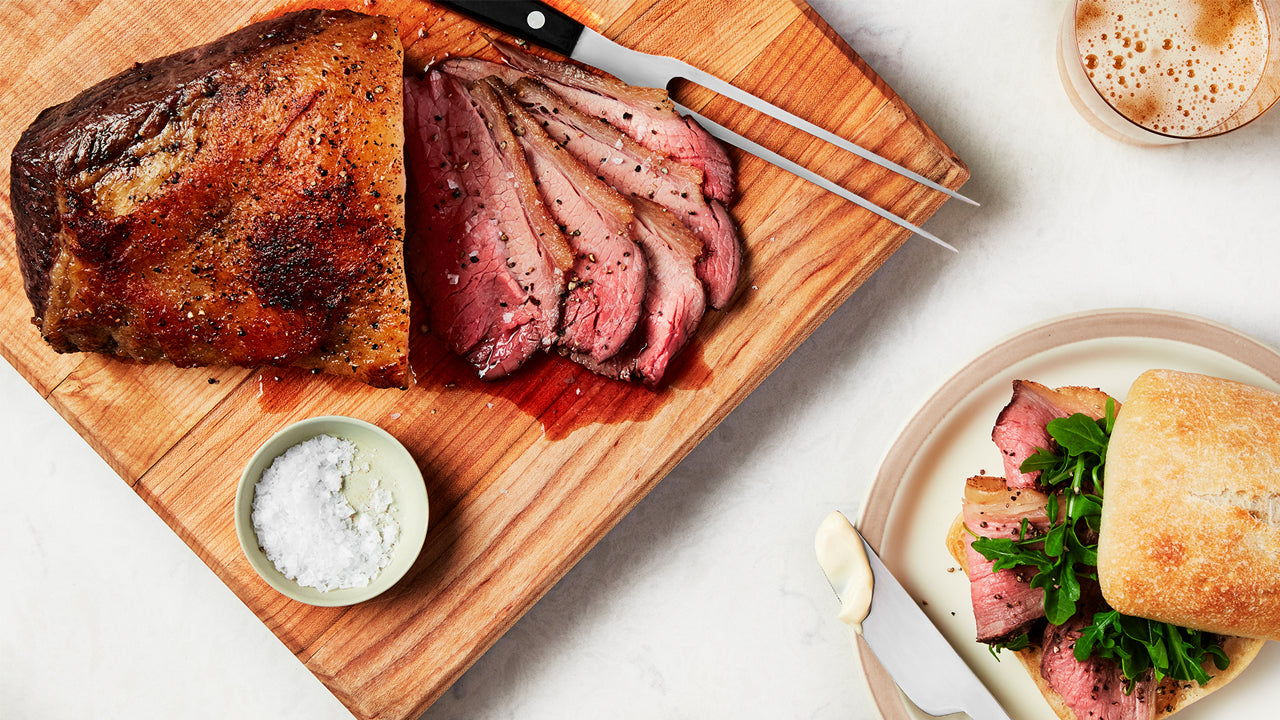
Reverse Seared Roast Beef
The reverse-sear technique-roast, then give a high-heat sear-is perfect for a large cut like a roast because it ensures uniformly cooked meat throughout. The low, slow roast tenderizes the meat, and the sear gives it a beautifully browned crust.
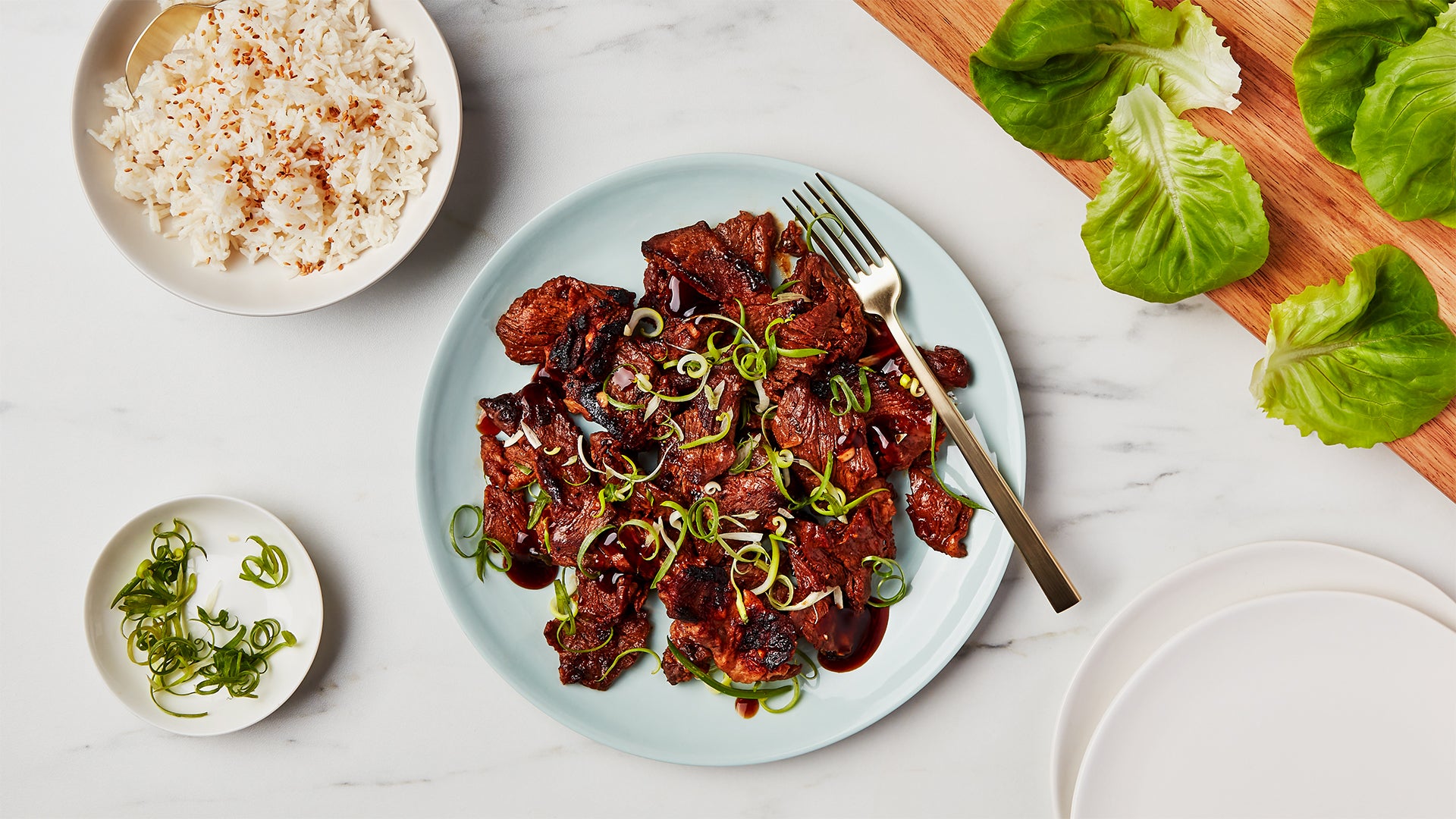
Beef Bulgogi
This beloved Korean BBQ dish gets its distinctive flavor from a unique marinade of soy, sesame, chile paste, brown sugar, and grated Asian pear. To absorb maximum marinade, you'll want to slice the beef as thinly as you can (a short stint in the freezer helps the beef firm up to make this possible). Serve over rice or with soft lettuce leaves for making wraps.
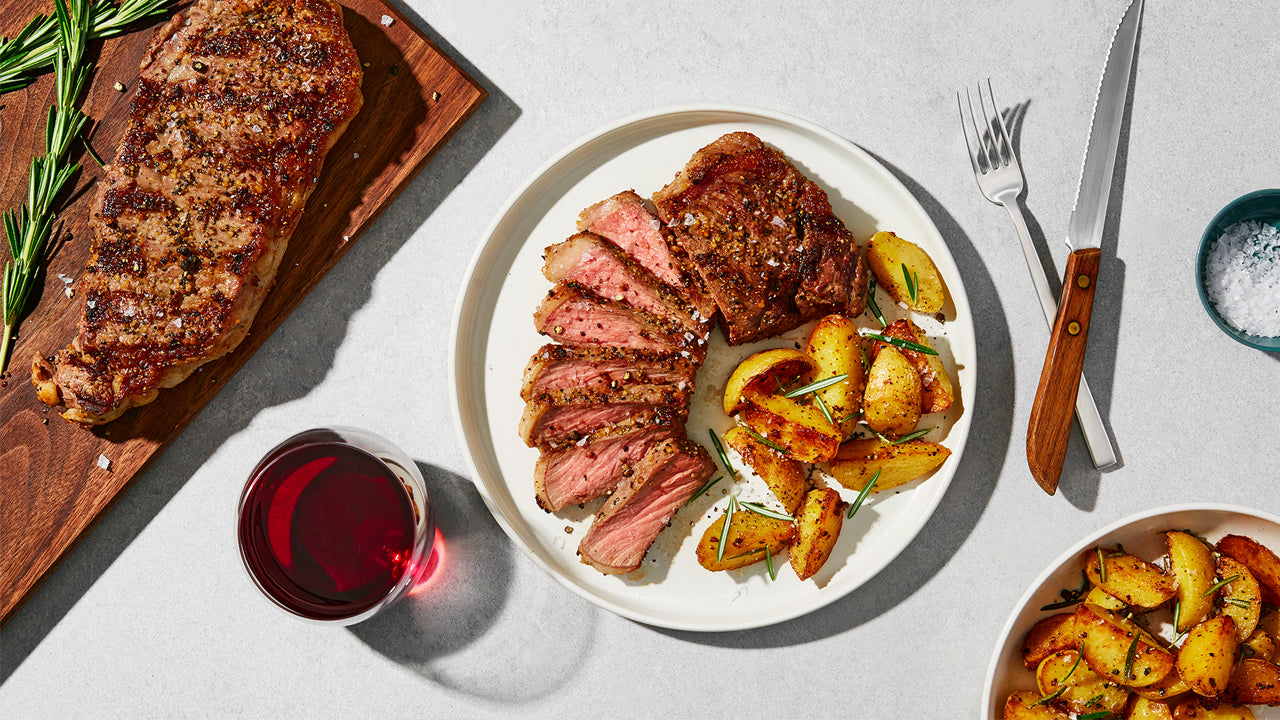
Simple Steak and Potatoes
This easy-to-prep dinner is sure to please the meat-and-potatoes folks. Baby gold potatoes are simply small Yukon Golds. Their diminutive size helps them cook up as quickly as the steak.


