

Lamb. Strong flavor, narrow window.
Lamb is the most strongly flavored common red meat, and the way you cook it makes or breaks it. Most cooks miss the window by 10 degrees, and once lamb crosses into gray, that signature richness turns chalky and livery.
Medium-rare to medium is the sweet spot for chops, racks, and loin cuts, where the fat softens but the meat still drinks its own juice. Shoulder and shanks operate on a different clock entirely — they want low and slow, held long enough for collagen to surrender. Pull early, rest properly, and lamb rewards the patience.
Pull · Final · Rest
Temperatures worth knowing
Rare
Target 125°F / 52°C
Pull at 120°F / 49°C · Rest 5–8 min
Deep ruby center, cool and slick. Best on loin chops and racks where tenderness carries the flavor.
Medium Rare
Target 135°F / 57°C
Pull at 130°F / 54°C · Rest 5–10 min
The classic. Rosy pink throughout, fat fully rendered at the edge, juice runs clear pink when sliced.
Medium
Target 145°F / 63°C
Pull at 140°F / 60°C · Rest 5–10 min
Warm pink center fading to tan. Forgiving and balanced, ideal for leg of lamb served to a mixed table.
Medium Well
Target 155°F / 68°C
Pull at 150°F / 66°C · Rest 8–10 min
Faint blush at the core. Texture firms up and the gamier notes step forward. Push no further on prime cuts.
Well Done
Target 165°F / 74°C
Pull at 160°F / 71°C · Rest 8–10 min
Uniformly brown, dry-leaning. Reserve for ground lamb dishes or guests who insist on no pink.
BBQ Tender
Target 205°F / 96°C
Pull at 200°F / 93°C · Rest 30 min
For shoulder, shanks, and neck. Collagen has fully broken down; meat pulls in soft strands.
A note on carryover
Lamb keeps cooking after it leaves the heat. Chops and small cuts climb 4–6°F as residual heat travels inward, while a whole rack, leg, or shoulder roast can rise 8–10°F before settling. Pull five degrees under your target on small cuts and a full ten under on large roasts. Rest on a warm board, loosely tented. Slice too early and the juice you worked for ends up on the cutting board.
6 cuts
By cut
Rack of Lamb
Roast · Whole
The showpiece cut. Sear hard for crust, then finish in a hot oven until the center hits medium rare.
Pull at 130°F · Medium Rare
Lamb Loin Chops
High heat · Quick
T-bone in miniature, with a tender eye and a strip of fat that needs real heat to render. Cast iron or grill, two minutes a side.
Pull at 130°F · Medium Rare
Leg of Lamb (boneless)
Roast · Whole
Butterflied and rolled, it roasts evenly and slices clean. Hit medium for a center that pleases everyone at the table.
Pull at 140°F · Medium
Lamb Shoulder
Low & slow · Braise
Heavily marbled and tough until it isn't. Hold it at low temp for hours until the muscle relaxes and the fat melts in.
Pull at 200°F · BBQ Tender
Lamb Shanks
Low & slow · Braise
Built for braising in red wine, stock, and aromatics. The bone gives up marrow, the meat surrenders off the bone.
Pull at 200°F · BBQ Tender
Merguez (Ground Lamb Sausage)
Grill · Medium
Spiced North African sausage that cooks fast over live fire. Char the casing, keep the inside juicy.
Pull at 155°F · Medium Well
Common questions
What temperature should lamb be cooked to?
For most chops, racks, and roasts, pull lamb at 130°F and rest to a final 135°F medium rare. Ground lamb should reach 160°F internal. Tough cuts like shoulder and shanks need 200°F or higher for collagen to break down.
Is medium-rare lamb safe to eat?
Yes, when the cut is a whole muscle like a chop, rack, or leg. The USDA recommends 145°F with a three-minute rest for whole cuts, and lower temps are widely considered safe by professional kitchens. Ground lamb is the exception and must reach 160°F.
What is the best doneness for lamb chops?
Medium rare, pulled at 130°F and rested to 135°F. The fat has rendered, the meat stays juicy, and the flavor lands without turning livery. Anything past medium starts to dry out fast on a thin chop.
How long do you rest leg of lamb?
Rest a whole leg or boneless rolled leg for at least 15 minutes, ideally 20, tented loosely with foil. Carryover will push the internal temperature up 8–10°F during the rest. Slicing early drains the juice and dulls the flavor.
Why is my lamb tough?
Two usual causes. Quick cuts like chops and racks were taken past medium, where the muscle squeezes out moisture and tightens. Or a braising cut like shoulder was pulled too early, before collagen had time to convert to gelatin. Match the cut to the method.
Guided cooks from CHEF iQ®
Cook lamb with the iQ App
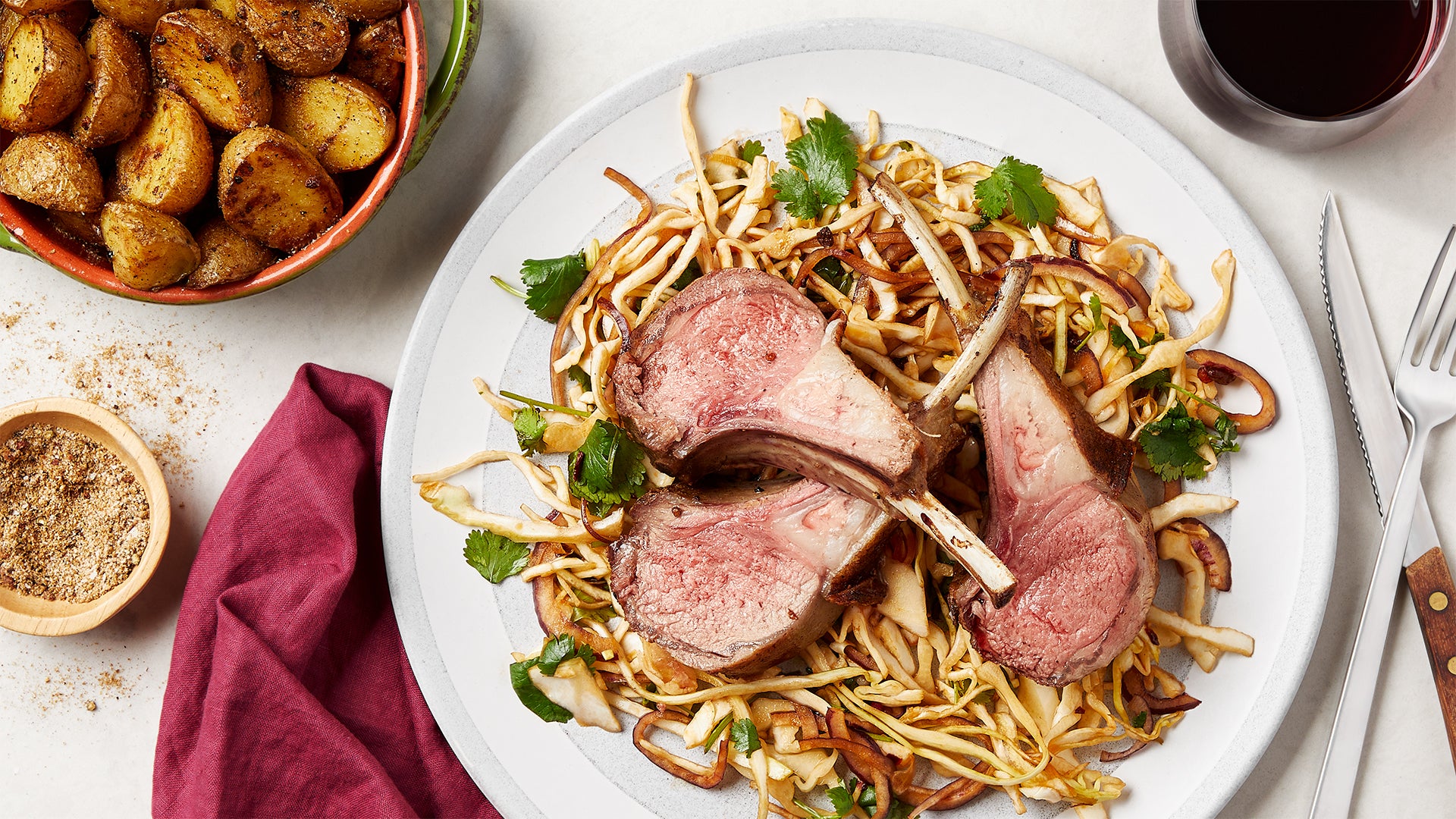
Cumin Rack of Lamb
A whole rack of lamb is an impressive centerpiece for a special-occasion meal...or it can turn any meal into an occasion. Look for a "frenched" rack of lamb (or ask your butcher to do it), which means that the meat and sinew has been scraped away from the rib bones, giving it a neat appearance and making it easier to slice into chops after roasting.
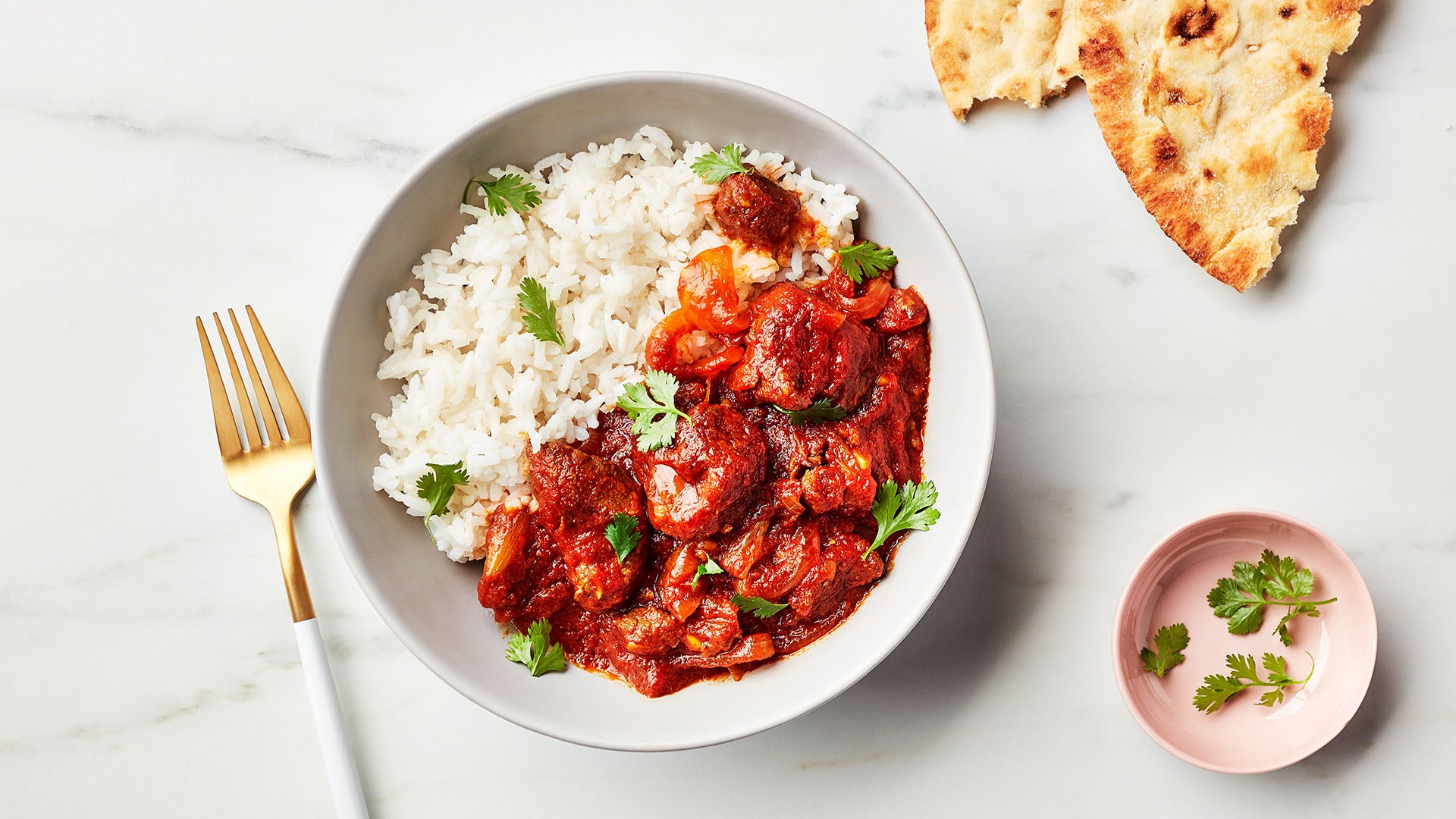
Lamb Vindaloo
This version of the classic spicy curry offers up some heat, but keep the cayenne handy if you like your vindaloo really hot. Tamarind, a fruit that grows profusely in India, is available in many forms. We're using tamarind nectar, a non-carbonated fruit drink, to incorporate its sweet-tart flavor. Serve the stew with rice or naan if you like.
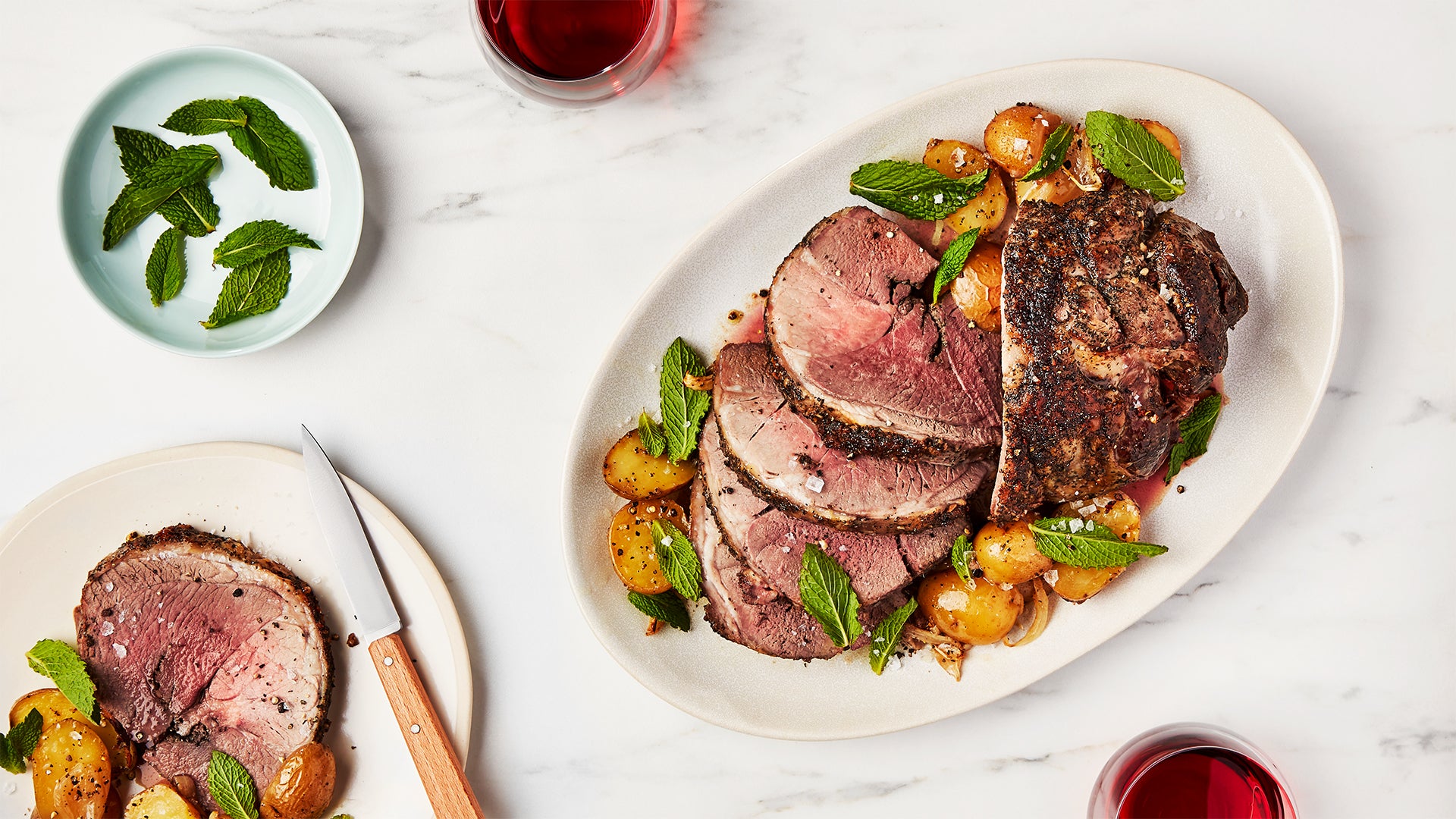
Boneless Roasted Leg of Lamb
Lamb with mint and garlic is a classic combo for a reason; the herbs and aromatics balance lamb's gentle gaminess to beautiful effect. And when potatoes and onions are roasted beneath the lamb, they soak up all that flavor. The technique of mincing garlic with salt to form a paste is a useful knife skill to know, but if you prefer you can substitute premade garlic paste.

