

Pork. Pink is back.
Pork is the cut of meat most misunderstood by a generation of home cooks. For decades, the USDA insisted on 160°F — a number that produced gray, chalky chops and trained Americans to fear pink.
In 2011, the guidelines changed: lean cuts are safe at 145°F with a three-minute rest, the same standard applied to beef and lamb. That single revision rewrote the rules. A pork chop can now be cooked to a blushing medium, juicy and tender, while shoulder and belly still benefit from the long, patient pull toward 205°F. Two cooking philosophies, one animal.
Pull · Final · Rest
Temperatures worth knowing
Medium
Target 145°F / 63°C
Pull at 140°F / 60°C · Rest 3–5 min
Faint pink center, springy, juices run clear-pink. The new gold standard for lean cuts.
Medium Well
Target 150°F / 66°C
Pull at 145°F / 63°C · Rest 3–5 min
Trace of pink fading to ivory, still moist if you don't push past it.
Well Done
Target 160°F / 71°C
Pull at 155°F / 68°C · Rest 5–8 min
Fully opaque, firmer bite. Reserve for stuffed cuts, ground pork, or anyone who wants none of the pink.
BBQ Tender
Target 205°F / 96°C
Pull at 200°F / 93°C · Rest 30–60 min
Collagen has surrendered. Probe slides in like warm butter. Shoulder, ribs, belly burnt ends.
A note on carryover
Pork carries over more than people expect. A chop pulled at 140°F will climb 3–5°F resting on the board, landing right at medium. A loin roast can rise 5–8°F, which is why pulling early matters more for larger cuts than smaller ones. For shoulder and belly cooked low and slow, carryover is negligible — temperature is no longer the metric; probe feel is. Trust the wobble, not the thermometer.
5 cuts
By cut
Pork Chops
High heat · Quick
Bone-in or boneless, 3/4 inch or thicker. Sear hard, finish gentle, rest briefly. Anything thinner overcooks before it browns.
Pull at 140°F · Medium
Pork Tenderloin
Reverse sear · Roast
The lean, narrow muscle along the spine. Cooks fast and forgives nothing — go medium or go home with sawdust.
Pull at 140°F · Medium
Pork Loin Roast
Reverse sear · Roast
Larger and more forgiving than tenderloin, with a fat cap worth scoring. Low oven, high finish, generous rest.
Pull at 145°F · Medium Well
Pork Shoulder / Boston Butt
Low & slow
Marbled, collagen-rich, built for hours. Push to probe-tender for pulled pork; the temperature is just a checkpoint on the way there.
Pull at 200°F · BBQ Tender
Pork Belly
Low & slow · Braise
Fat, skin, and meat in alternating layers. Render slowly so the fat softens and the skin can crisp at the finish.
Pull at 200°F · BBQ Tender
Common questions
What temperature is pork done at?
For whole-muscle cuts like chops, tenderloin, and loin, 145°F internal with a three-minute rest. Ground pork should still hit 160°F. Shoulder and belly aren't measured by doneness temperature — they're cooked to texture, typically around 205°F.
Is pink pork safe to eat?
Yes, in lean whole-muscle cuts cooked to 145°F and rested three minutes. Modern pork is raised under conditions that virtually eliminated trichinella, the parasite behind the old 160°F rule. Pink does not mean undercooked.
Why did the safe temperature for pork change?
The USDA lowered the recommendation from 160°F to 145°F in 2011 after decades of data showed trichinella was no longer a meaningful risk in commercial pork. The change aligned pork with beef and lamb standards and corrected for years of overcooking.
How long do you rest pork chops?
Three to five minutes off the heat, loosely tented or uncovered on a warm board. Juices redistribute, carryover lifts the center another 3–5°F, and the chop holds its bite when you cut it.
What's the difference between pork chops and pork shoulder cooking temps?
Chops are lean and cook to a target — 145°F for tender, juicy meat. Shoulder is fatty and collagen-heavy, requiring hours at low heat until it hits roughly 205°F and the connective tissue breaks down. Same animal, opposite techniques.
Guided cooks from CHEF iQ
Cook pork with the iQ App
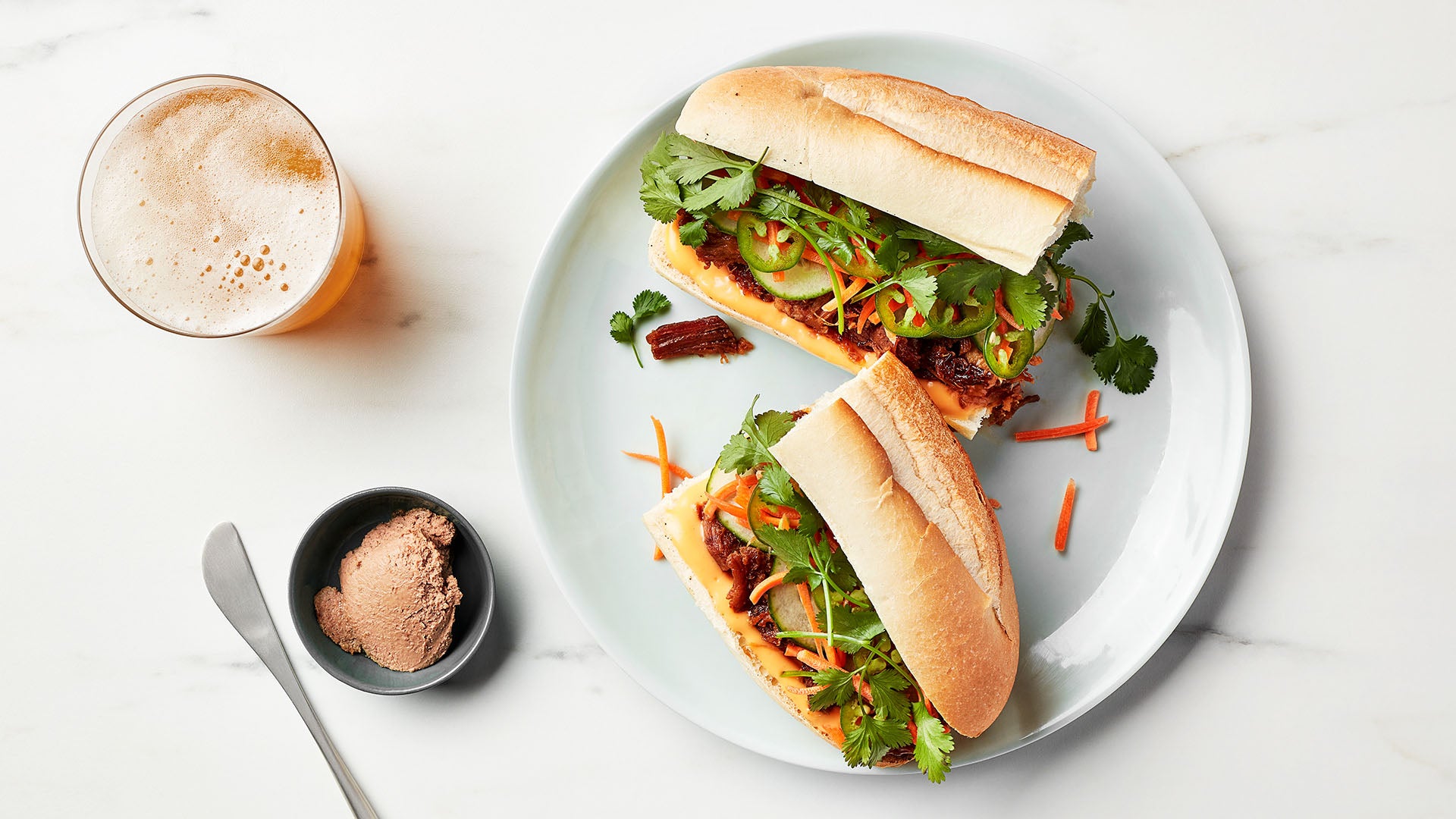
Pork Belly Banh Mi
Once you try this Vietnamese sandwich, you're hooked. With its crunchy, salty, spicy and sour elements, there is a lot going on, but it takes less time to make than you might think. Sambal oelek (in the sweet-spicy pork belly sauce) is a fresh-ground chile paste found in most Asian markets; if you can't find it you can substitute sriracha.
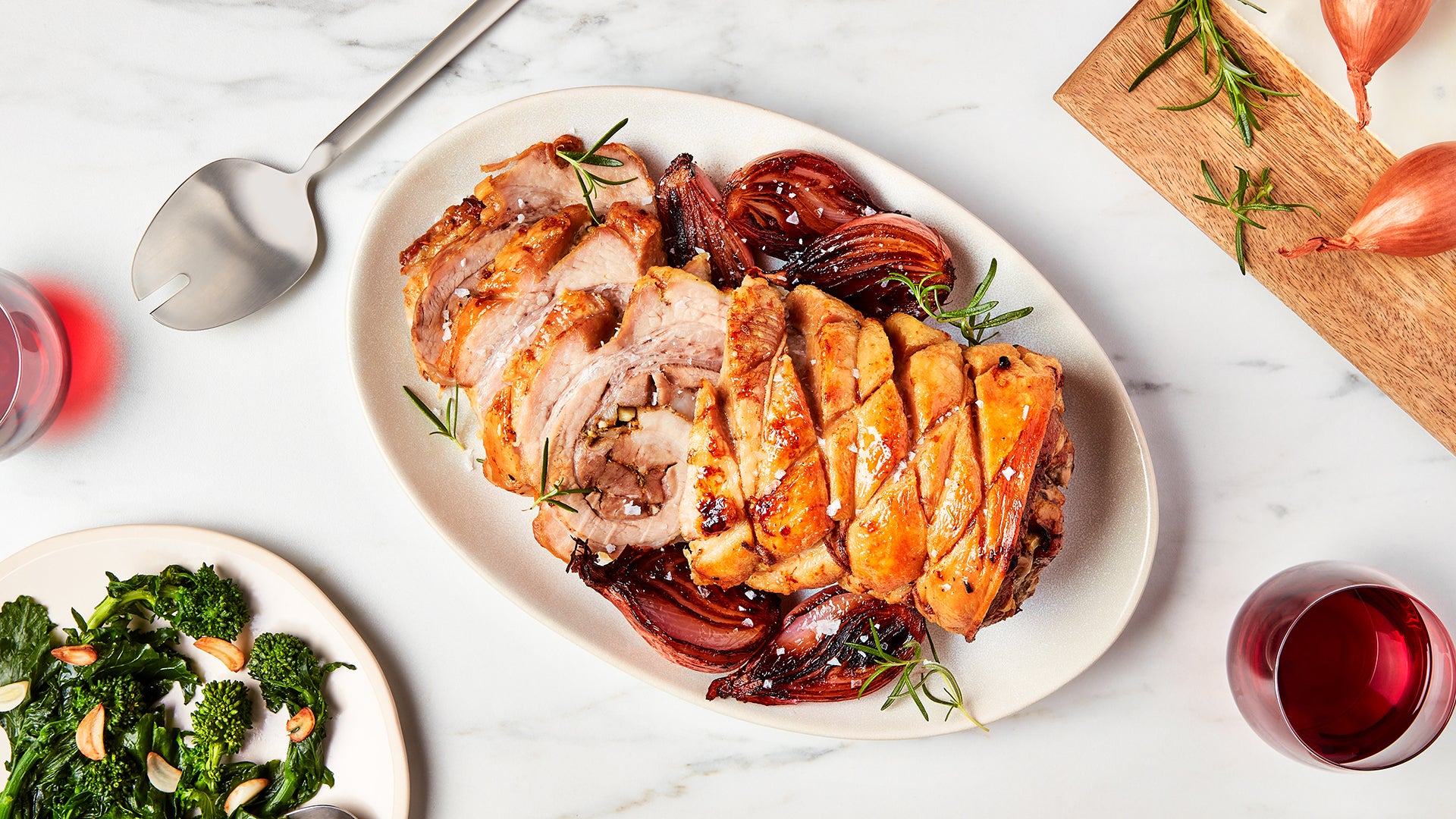
Easy Porchetta Roast Pork
While porchetta typically uses skin-on pork belly, we opt for skinless since the skin can become tough when using conventional cooking methods like roasting. You'll still get a beautifully crusted outside and juicy, delicious inside. Note that you can grind your fennel in a spice grinder, blender, or using a mortar and pestle.
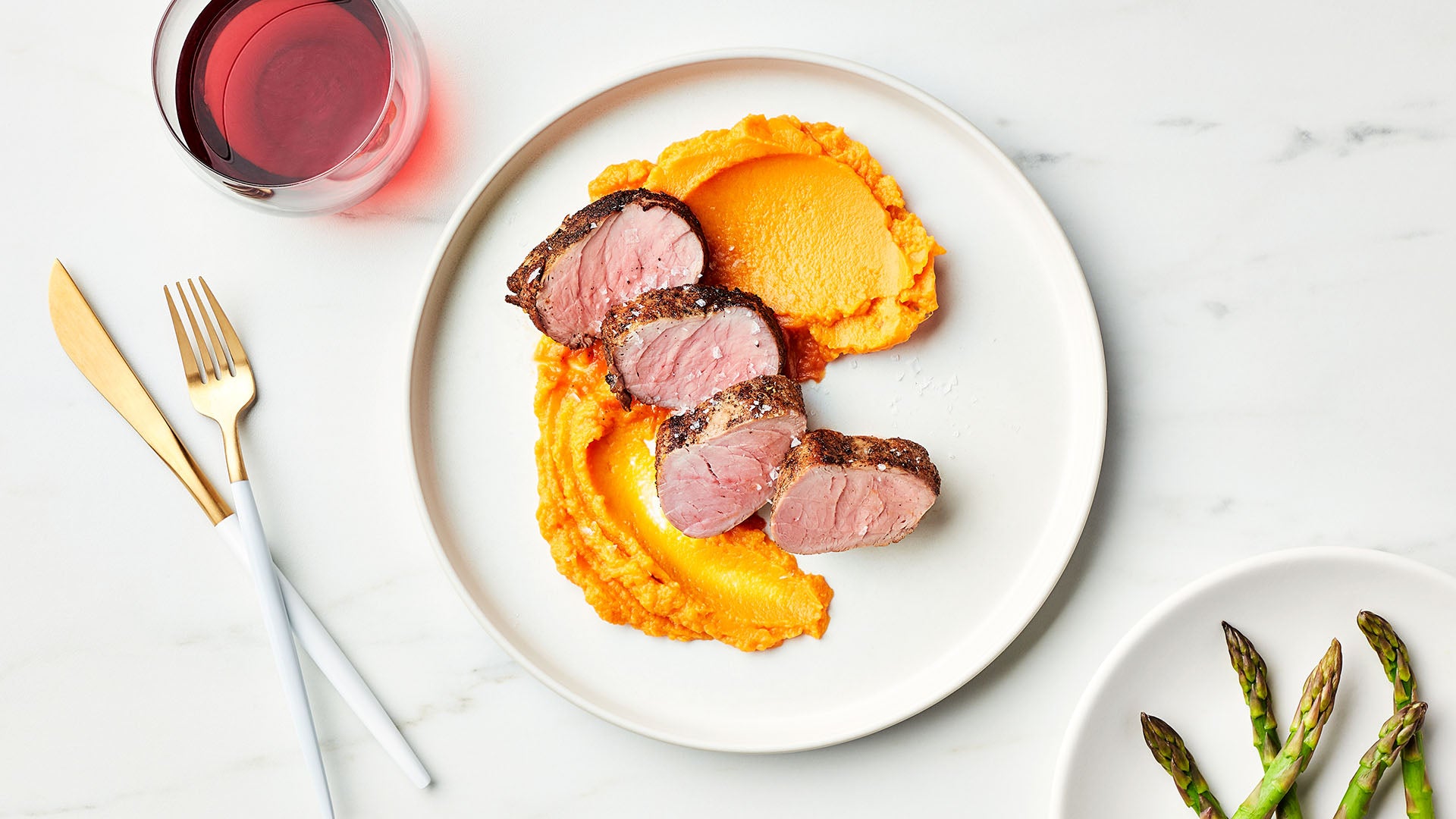
Pork Tenderloin and Mashed Sweet Potatoes
Green beans or Brussels sprouts would pair well with this simple but flavorful fall supper for two.


