

Fish. Cooks fast, fails fast.
Fish cooks at temperatures that would barely warm a steak. The proteins in seafood denature thirty to forty degrees lower than those in beef or pork, which is why a fillet goes from translucent to dry in the time it takes to pour a glass of wine.
The window between rare and overcooked is narrow — often just five degrees separates buttery from chalky. Species matters more here than with any other protein: fatty salmon rewards a gentle hand at medium-rare, lean cod wants to be cooked through, and sushi-grade tuna is best barely warmed at the edges.
Pull · Final · Rest
Temperatures worth knowing
Rare
Target 120°F / 49°C
Pull at 115°F / 46°C · Rest 1–2 min
Cool, translucent center with a seared crust. Best for tuna, salmon belly, and sushi-grade cuts.
Medium Rare
Target 125°F / 52°C
Pull at 120°F / 49°C · Rest 1–2 min
Warm, glossy center that still glistens. Salmon and arctic char shine here.
Medium
Target 130°F / 54°C
Pull at 125°F / 52°C · Rest 2–3 min
Opaque throughout with a pearlescent finish. The restaurant standard for most fillets.
Medium Well
Target 135°F / 57°C
Pull at 130°F / 54°C · Rest 2–3 min
Fully opaque and firm. Flakes break cleanly. Better suited to leaner whitefish.
Well Done
Target 145°F / 63°C
Pull at 140°F / 60°C · Rest 2–3 min
USDA-safe and fully cooked. Flakes are dry-edged but intact if pulled on time.
A note on carryover
Fish fillets are thin, so carryover is modest but fast — expect a three- to five-degree rise after pulling, finishing in under two minutes. Because the temperature window is so narrow, those few degrees decide the entire texture. Pull earlier than your instincts suggest, especially with salmon and tuna. A probe thermometer in the thickest part is the only reliable way to land the target.
5 cuts
By cut
Salmon Fillet
Pan sear · Quick
Skin-on, scored, started in a cold pan with oil and brought up gradually for crackling skin and an evenly cooked interior.
Pull at 120°F · Medium Rare
Tuna Steak
Grill · Medium
Sushi-grade ahi or yellowfin, brushed with oil and seared hard on each side. The interior should stay ruby red.
Pull at 115°F · Rare
Halibut or Cod
Roast · Whole
Lean, flaky whitefish that benefits from a butter-basted finish or a moist-heat roast at moderate temperature to prevent drying.
Pull at 125°F · Medium
Branzino or Trout
Roast · Whole
Whole fish stuffed with citrus and herbs, roasted until the dorsal fin pulls free and the flesh near the spine just turns opaque.
Pull at 125°F · Medium
Shrimp and Scallops
Pan sear · Quick
Shellfish move even faster than fillets. Sear scallops until the crust is mahogany; pull shrimp the moment they curl into a loose C.
Pull at 120°F · Medium Rare
Common questions
What temperature should fish be cooked to?
The USDA recommends 145°F for safety, but most chefs pull fish between 120°F and 130°F depending on species. Fatty fish like salmon are typically served medium-rare, while leaner whitefish is cooked to medium.
Is salmon safe to eat medium-rare?
Yes, when sourced from a reputable supplier. Restaurant kitchens routinely serve salmon at 125–130°F, and sushi-grade salmon is consumed raw. Frozen salmon labeled for raw consumption has been treated to eliminate parasites.
How do you know when fish is done without a thermometer?
Press the fillet gently — cooked fish flakes apart with light pressure, while raw fish springs back. A paring knife slipped into the thickest part should reveal flesh that is just opaque with a thin translucent line at the center.
What's the difference between cooking salmon and tuna?
Tuna is leaner and denser, so it's typically seared hard and left rare or medium-rare. Salmon is fattier and forgiving, cooked a touch further so the fat renders and the flakes loosen. Overcook either and you lose what makes them worth eating.
Why does fish overcook so fast?
Fish proteins denature at much lower temperatures than meat — around 120°F versus 150°F+ for beef. Combined with thin fillets and minimal connective tissue, there's almost no buffer between perfectly cooked and dry.
Guided cooks from CHEF iQ®
Cook fish with the iQ App
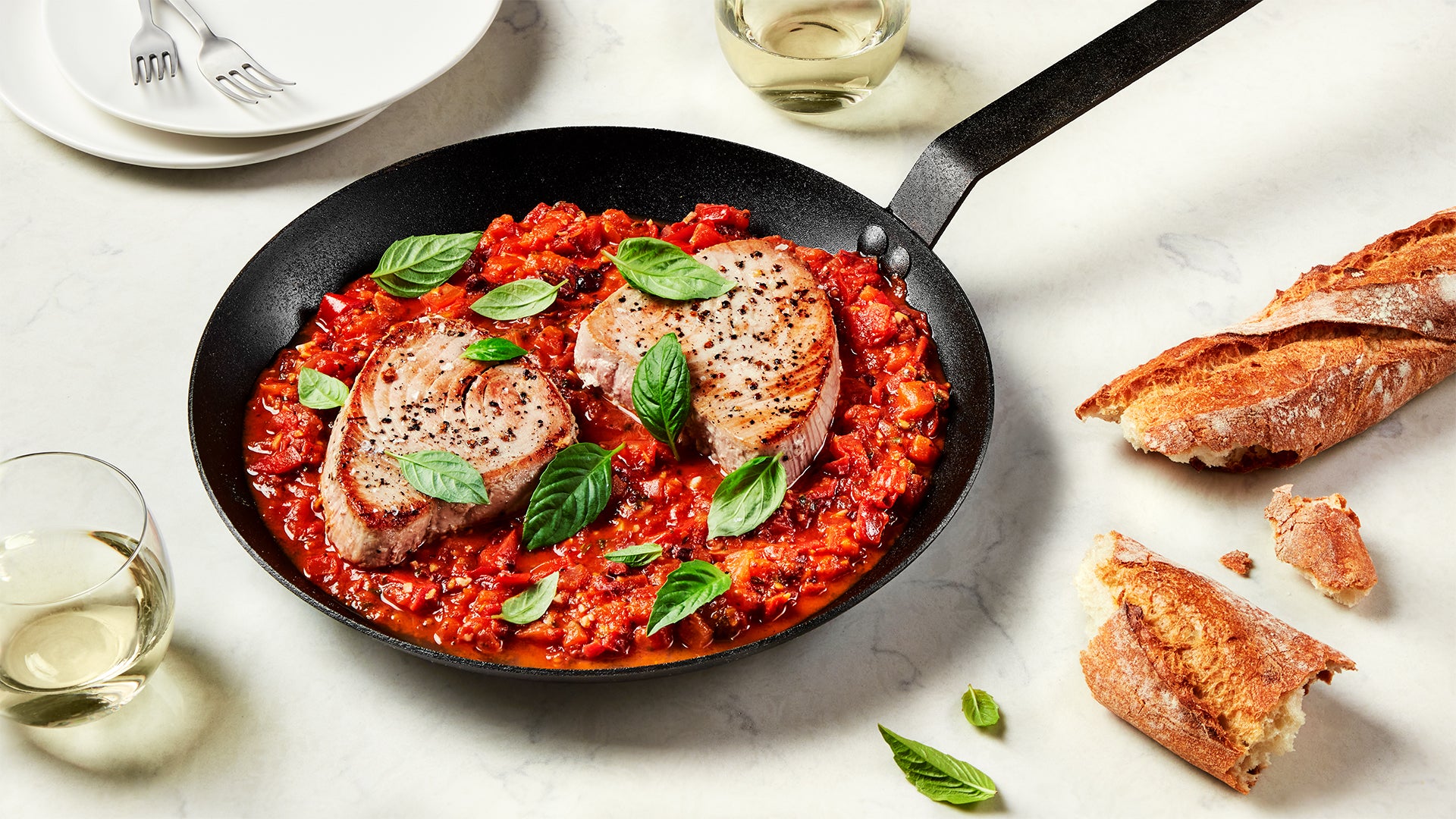
Tuna Puttanesca
The brininess of olives and anchovies and sweetness of fresh tomatoes give a rich, complex backdrop to these meaty seared tuna steaks.
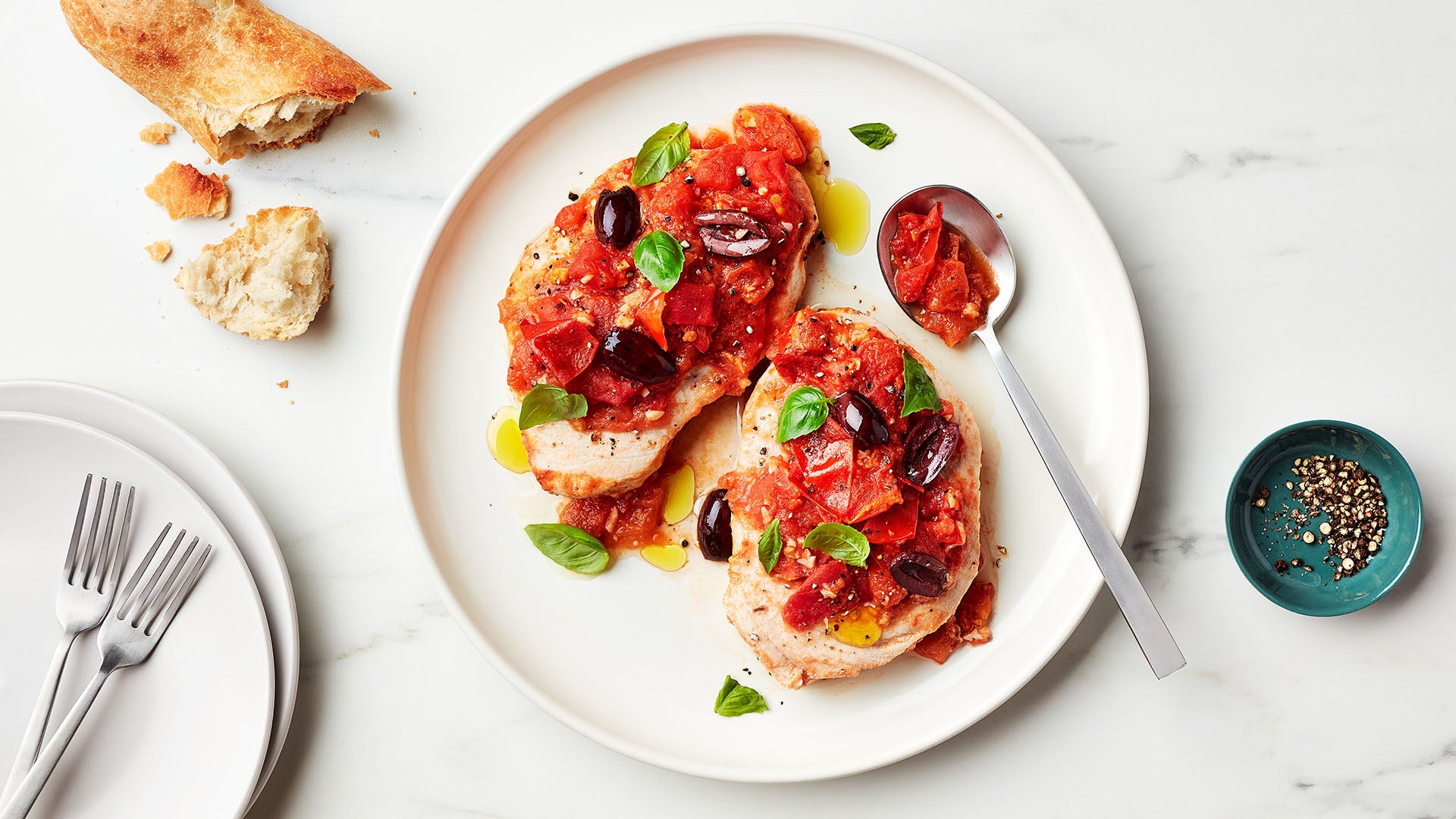
Grilled Swordfish with Lemon-Caper Butter
A compound butter with capers, lemon, and shallots makes a zesty counterpoint to meaty swordfish steaks. The recipe yields extra butter that's delicious on any fish or crusty bread. When buying swordfish, ask your fishmonger to remove the bloodline—the dark red portion near the backbone—for better flavor and presentation.
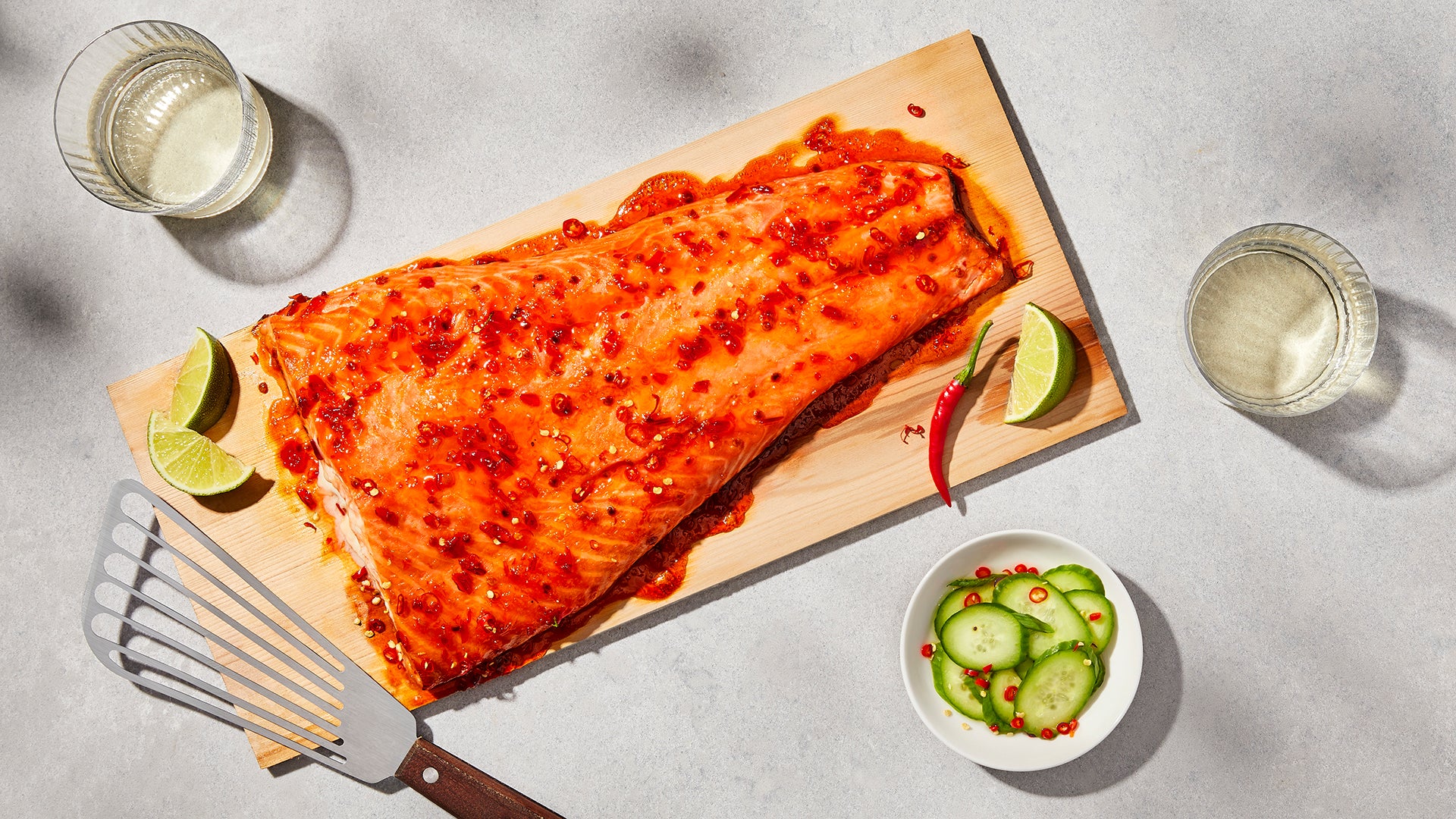
Sweet Chili Salmon
Grilling on a plank subtly flavors salmon with gentle notes of woodsy cedar, while a spicy glaze counters the richness of the fish. A crisp cucumber salad would make a refreshing side.
